PFAS in Tap Water: How to Remove “Forever Chemicals” at Home
The U.S. Geological Survey found that almost half of all tap water tested contains PFAS or "forever chemicals." You've ditched non-stick pans for cast iron, but what about the water flowing from your faucets?
Your water may look and taste fine but still harbor invisible contaminants.
If you don’t filter your drinking water its time to start.
Switching to filtered water takes almost no effort and could meaningfully lower exposure to chemicals and microplastics.
I started to question my exposure to environmental toxins when my 4 year old dog developed a mast cell tumor even though she was eating a fresh food diet. It may seem dramatic, but pets and children react to much smaller levels of chemical exposure.
They’re an early warning sign that we have opportunities to improve our home’s health. When you know better you do better.
What Are PFAS in Drinking Water?
The U.S. Geological Survey found that almost half of all tap water tested contains PFAS or "forever chemicals." You've ditched non-stick pans for cast iron, but what about the water flowing from your faucets?
Your water may look and taste fine but still harbor invisible contaminants. Pollution enters at the source, during treatment, or through your home's pipes. Old infrastructure and regulations allow for harmful chemicals into our drinking water.
Keep reading to understand what causes the problem, but I think everyone should use some sort of water filtration. Skip to the end for my preferred options.
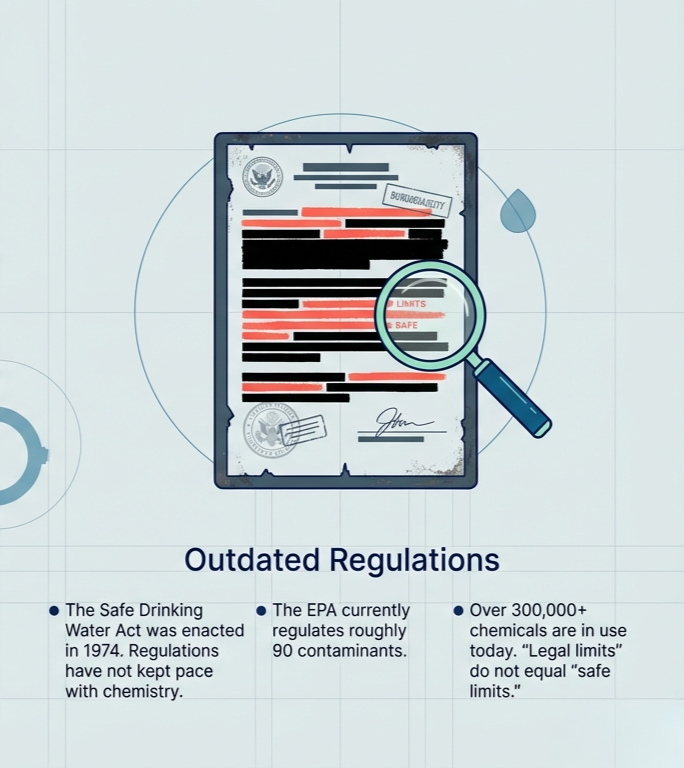
EPA regulations can’t keep up with chemicals in circulation today.
Aging Infrastructure
Builders constructed many water systems 50-100+ years ago. Metro areas have even older systems—some homeowners still have lead, wood, or terracotta pipes.
9 million service lines still contain lead. Flint wasn't isolated.
Outdated Regulations
Congress enacted the Safe Drinking Water Act in 1974, but regulations haven't kept pace. The EPA regulates roughly 90 contaminants, yet 300,000+ chemicals are in use today.
"Legal limits" don't always equal "safe limits."
This is why some consumers prefer to use EU brands. The EU is a more risk averse system where brands must prove ingredients are safe. The US allows brands to self certify ingredients are safe and tend to assume ingredients are safe until proven otherwise.
Are PFAS Harmful to Your Health?
There’s a myriad of things in our tap water. Some are harmless and some are a little more suspect.
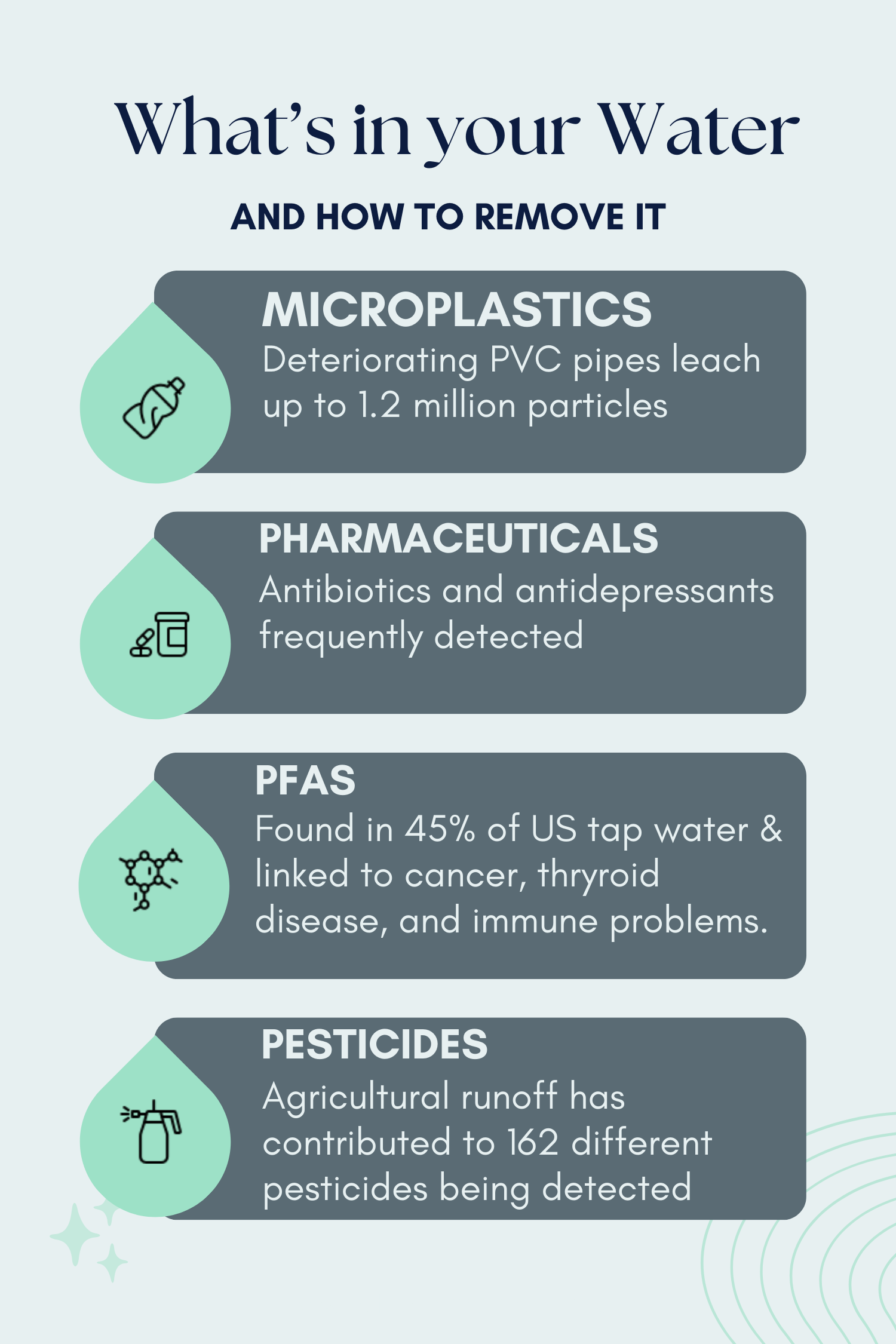
There’s more contaminants in your water than you think.
PFAS ("Forever Chemicals")
Linked to cancer, thyroid disease, immune problems
Microplastics
220,000 to 1.2 million particles enter your body annually through tap water
PVC pipes degrade and release these particles
Lead
Corrodes from old pipes and fixtures into your water
Fluoride
2 million people receive water above safe thresholds
This one is still being hotly debated and lacks consensus from the scientific community
Pesticides & Nitrates
162 pesticides detected from source to tap
Agricultural runoff contaminates groundwater
Pharmaceuticals
Treatment plants can't filter them completely
Endocrine disruptors (think thyroid and fertility impacts) affect hormones (proven in fish, concerning for humans)
Chlorine Byproducts
Disinfection kills harmful microbes but creates new risks
Why testing isn’t worth the money.
You can test your water through the EPA’s Consume Confidence Report or use independent testing.
The EPA only tests for regulated contaminants (the 90, not the 300,000+). They also use levels that not everyone agrees are safe.
Labs like Tap Score provide comprehensive testing for $100-300. However, most filtration options are less than $300. You’re better off spending your money on a solution, not understanding how big the problem is.
Remember odds are your water could be better. I’d skip the test and just get a filter.
Reverse Osmosis vs Carbon Filters for PFAS
Understanding filtration is confusing. Few filters address all concerns. Here's the breakdown:
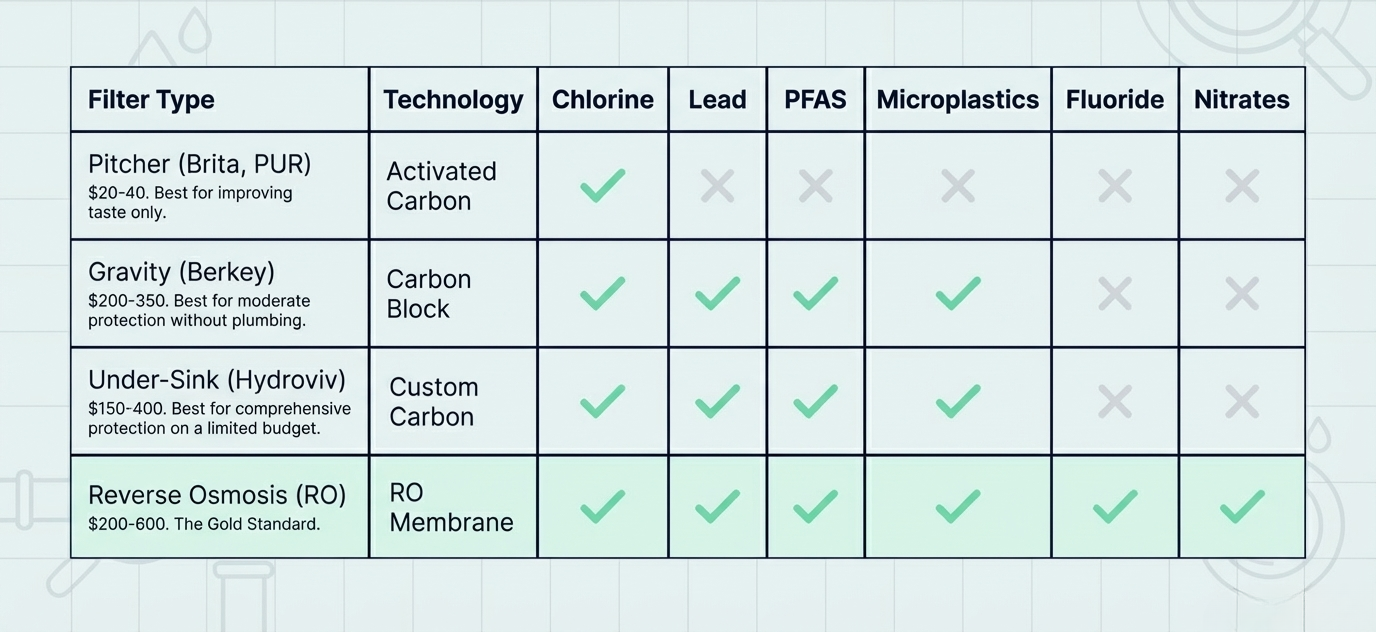
Time to upgrade from that Brita pitcher.
Pitcher Filters (Brita, PUR)
Water trickles through inexpensive activated carbon. Removes chlorine taste, but that's about it.
Gravity Filters (Berkey, Waterdrop King Tank)
Gravity forces water through millions of microscopic pores that trap contaminants.
Under-Sink Filters (Hydroviv)
Blend activated carbon, catalytic carbon, and ion exchange resins. Physically and chemically remove contaminants.
Reverse Osmosis Systems
The gold standard. Forces water through a semi-permeable membrane with microscopic pores. Blocks 99.9% of contaminants—lead, PFAS, arsenic, bacteria, viruses, pharmaceuticals, microplastics.
Given the potential health hazards, the conservative approach makes sense. Countertop RO systems offer affordability. Under-sink systems provide convenience with larger clean water tanks.
Water quality matters most for developing bodies. If you're pregnant, trying to conceive, or raising small children, invest in reverse osmosis. Better to be more conservative here.

There’s a filter option for every budget and situation. Anything is better than tap water.
Is Filtered Water Actually Safer Than Tap Water?
Small changes create big health impacts. Start today and rest assured you’re on the path to making your family healthier and happier. I’ve used all of these products at various points in my filtration journey.
Whatever you choose, make sure you understand filter cost and frequency of changes. Some of the upfront cheaper units need monthly filter changes. That adds up quick!
→ Shop My Top Water Filter Picks:
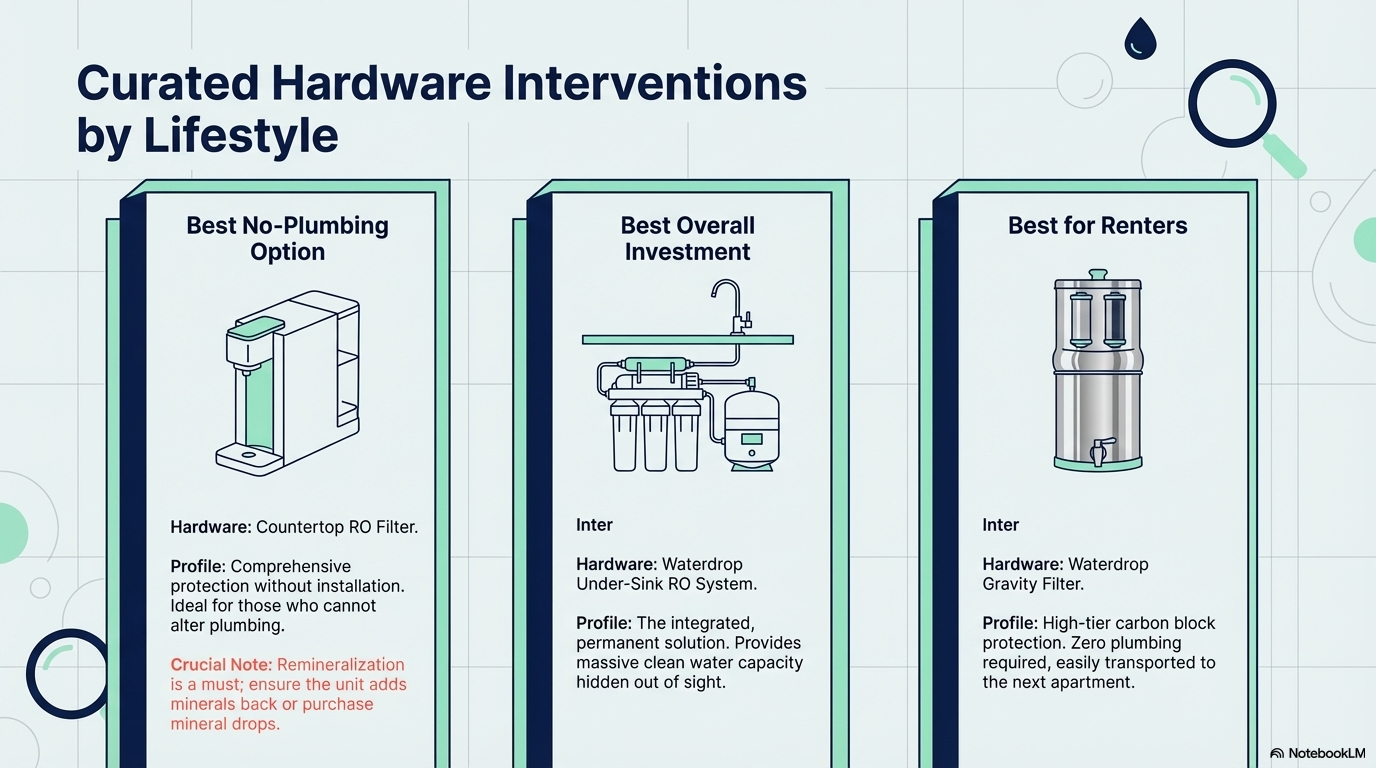
Best No Plumbing Option: Countertop RO Filter – Comprehensive protection without installation. Remineralization is a must or you’ll have to buy drops to add to the water.
Best Overall: Waterdrop Under-Sink RO System – Integrated solution with large clean water capacity
Best for Renters: Waterdrop Gravity Filter – No plumbing required, excellent filtration
A Note on Water Access
We're fortunate to consider whether our tap water is healthy enough. An estimated 2.2 million Americans lack running water entirely. Consider supporting organizations like the Navajo Water Project that bring clean water to communities without this basic necessity.
A More Practical Approach to Reducing Exposure
If you’re starting to rethink your water, it’s often a sign you’re ready to look at other everyday exposures too.
One of the biggest (and most overlooked) sources inside the home is phthalates. Download the free phthalate-free home guide here.