
The 12 Foods You Should Always Buy Organic (And the 15 Where It’s a Waste of Money)
I don’t buy 100% organic. I’m not advocating for a no-tox lifestyle. I find it overwhelming and mostly based in fear mongering.
The world we live in is full of plastics, and pesticides, and new chemicals are created daily. But I’ve had a dog diagnosed with cancer at just 4 years old and it's a cancer that seems tied to chemical exposure.
If it's easy to make a swap to reduce the chemicals in my household I do it. I’d rather be safe than sorry, and I believe every little bit adds up.
What Is the EWG Dirty Dozen List? (And Why It Matters for Your Family)
Have you heard people reference the “Dirty Dozen”? It’s a list published every year by the Environmental Working Group, a nonprofit health and environment advocacy group. They first started publishing The Shopper’s Guide to Pesticides in Produce in 2004, and this year has had some of the biggest shake ups.
They reviewed USDA data on almost 55,000 samples of 47 different fruits and vegetables. Samples are scrubbed, peeled, and washed and then tested. You might think you can wash off the chemical residues, but you’ll need a little more than a quick rinse under the faucet.
Critics argue that the detectable levels of pesticides fall within the legal limits, however most of the chemicals are banned in the EU. As with most things these days we have to look for a compromise. Limit exposure where it’s easy and reasonable to do so, but understand that there is nuance in the discussion.
While the EWG faces criticism for being overly cautious it’s worth noting that their methods are peer reviewed, and they are using data from the USDA, not performing these tests themselves.
The 2025/2026 Dirty Dozen List: 12 Fruits and Vegetables with the Most Pesticides
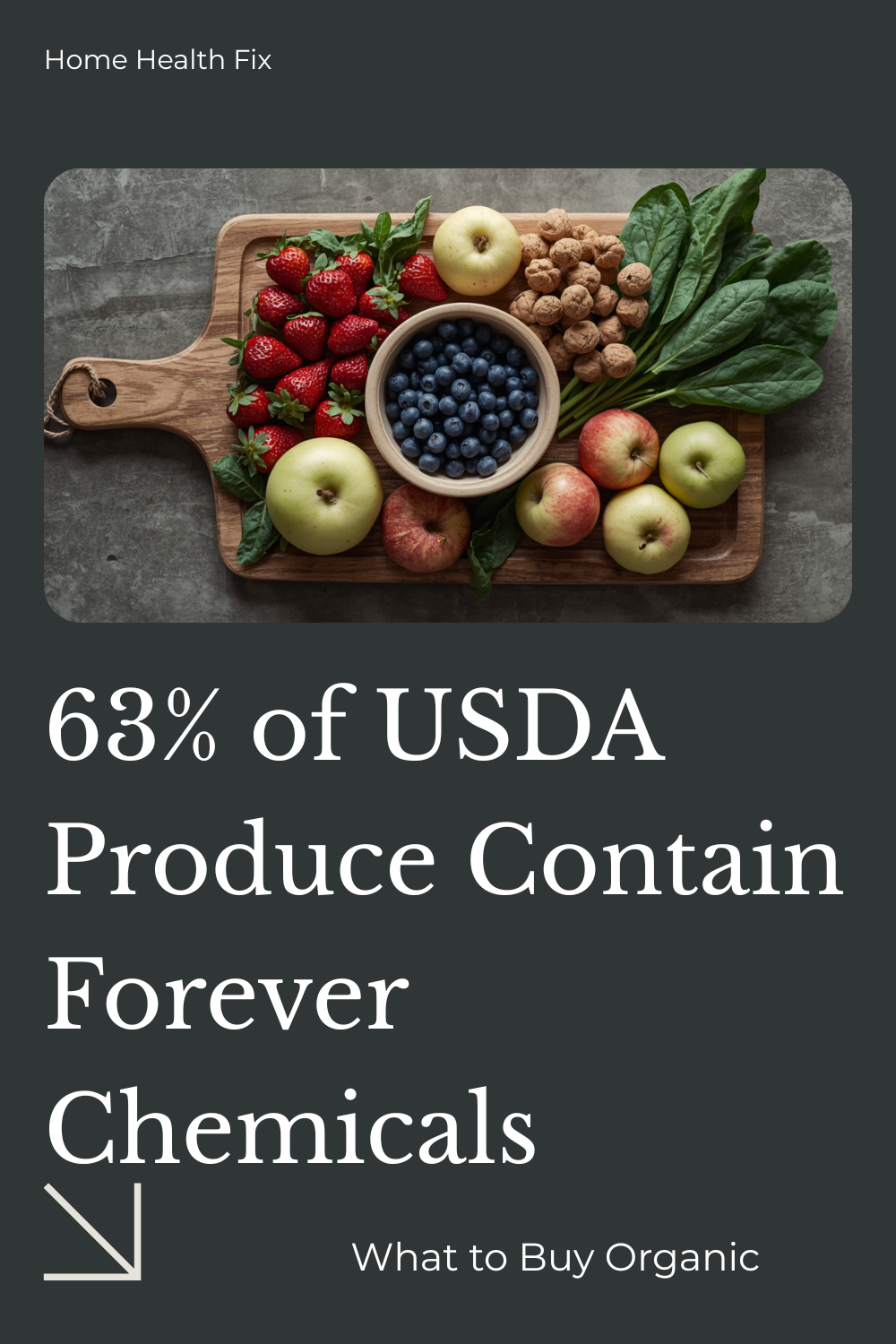
Of the 47 foods tested, these 12 were the most contaminated with pesticides. For the first time the list also included foods contaminated with PFAS or “Forever Chemicals”, hormone disrupting chemicals that cause developmental issues.
Spinach — the most contaminated produce
Kale, collards, and mustard greens — over half the samples contained a pesticide that’s been banned in the EU for 15 years
Strawberries — even the USDA found that almost all samples – 99 percent – had detectable residues of at least one pesticide
Grapes
Nectarines — thin skins easily allow pesticides to penetrate the fruit
Peaches
Cherries
Apples
Blackberries — USDA tests showed that over 78% of the samples tested contained two or more pesticides
Pears
Potatoes — the most consumed vegetable in America
Blueberries
The average American consumes around 50 pounds of potatoes, 8 pounds of strawberries, and 17 pounds of apples per year. It’s important to consider the cumulative dose of pesticides across all forms.
This year we also got data on PFAS found in these tests. A whopping 63% of samples tested contained PFAS, or forever chemicals. It’s increasingly important to reduce our exposure when possible, because we’re inundated with microplastics and the PFAS they leach, more than ever before.
Dirty Dozen vs. Clean Fifteen: Which Produce Actually Needs to Be Organic?
Most of us don’t have an infinite grocery budget and with food costs rising, the “Clean Fifteen” offer some relief. Nearly 60% has no detectable pesticide residue, meaning these are the fruit and veggies where you can buy conventional with little risk.
Ever wonder if you need to buy organic avocados? The answer is no. Here’s the list of the cleanest 15 fruits and vegetables.
Pineapple
Corn
Avocados
Papaya
Onions
Sweet peas (canned and frozen)
Asparagus
Cabbage
Cauliflower
Watermelon
Mangos
Bananas
Carrots
Mushrooms
Kiwi
These are the foods that have the fewest pesticides and a great spot to stretch a dollar. Not seeing a food on either list? Lots of tested items fall somewhere in between, these foods are less clear cut. If you eat something often (more exposure) and it’s not on the clean list it might be a good idea to buy organic. If it’s something you eat infrequently, you’re probably safe getting the conventional version.
Is Organic Worth It? The Science Behind Pesticide Residues on Produce
Is organic worth it? It depends — Dirty Dozen yes, Clean Fifteen maybe not unless you have an unlimited budget.
First and foremost, eating a diet high in fruit and vegetables is the most important factor for health. We’re not trying to discourage eating produce.
If you’re able, going organic for just the Dirty Dozen will create meaningful health improvements. Studies show switching from conventional to organic produce significant reductions in pesticide levels in urine tests — including a 70% reduction in glyphosate.
Does Washing Produce Remove Pesticides?
While it can remove some of the pesticide residue, washing does not remove 100%. Remember the EWG washes and peels produce before testing. One study found that washing fruit with detergent was actually less effective than washing under running water.
The most effective washing method appears to be soaking in baking soda for at least 15 minutes, but remember this still doesn’t solve for pesticides that have passed through the skin into the fruit or vegetable.
How to Shop the Dirty Dozen on a Budget (Without Overpaying for Organic)
If you can only change a small thing, start with the most commonly eaten foods in your house — strawberries, blueberries, and potatoes top the list for most of us.
Farmers markets offer produce that while not USDA certified organic may be pesticide free, just ask as you’re shopping.
Shopping peak season also usually results in discounts. A greater supply usually means lower prices.
Finally stock up on frozen fruit and veggies. Frozen foods are generally more economical and offer the same nutritional benefits.
Want to Remove Even More Toxins from Your Home?
Cleaning up your produce is a great first step — but pesticides are just one piece of the puzzle. Phthalates are hormone-disrupting chemicals hiding in everything from plastic food containers to personal care products, and most of us are exposed daily without realizing it. Download our free Phthalate-Free Home Guide to find out where they’re lurking and the simple swaps that actually make a difference.

How to Improve Indoor Air Quality Naturally (What Actually Works)
Your home air is 2–5x more polluted than outdoor air. Here's what actually works to fix it — and the two air purifiers I actually use.

Ultra fine particles contribute to poor indoor air quality.
Have you gotten home from a week away and noticed your house smelled musty? I consider myself a clean freak so its a small identity crisis when I get home and I think my house smells old.
Your house should actually smell like nothing. Not air fresheners, or clean laundry, or especially lavender scented Clorox.
That musty smell led me to find a small mold instance around some of the air vents. A consult with an HVAC mold specialist recommended lower quality HVAC filters and higher quality air purifiers
What Is Indoor Air Quality (Do Air Purifiers Remove Toxins or Just Dust?)
According to the EPA, your home air traps 2 to 5 times more pollutants than outdoor air.
We think our HVAC filters are doing the heavy lifting, but most standard residential systems can’t handle the added load of a high performance filter.
This is where air purifiers come in. Using HEPA technology they trap and remove tiny particles in the air. This includes common allergens, mold spores, dust, even smoke and some VOCs.
HEPA is the base standard but some filters provide Ulta HEPA filtration for an even cleaner experience, I’ve included the two units I’ve bought and would recommend below.
My favorite unit is the AirDoctor 3500, but it comes at a pretty high price point. It captures 99.99% of airborne particles at 0.003 microns, which is 100x smaller than the HEPA standard. It’s a higher price point, but after the mold scare it was worth it to me.
We have a second house that we rent on AirBnb. When I bought a preventative filter for that house, I went with the GermGaurdian XL. I’ve used smaller models from them and find they strike a balance between effectiveness and cost. It’s about half the price of the AirDoctor.
The GermGaurdian uses HEPA technology instead of the higher effective UltraHEPA. It still traps 97% of airborne particles but can’t get some of the smaller particles the AirDoctor can capture.
Both units auto sense and will ramp up filtration when they detect more airborne particles than normal. It’s humbling to see what activities cause the filters to ramp up. Blow drying my hair, spray deodorant, and candles all trigger it go into overdrive
What Causes Poor Indoor Air Quality in Your Home
Building materials, smoking, cooking, and biological contaminants like dust and mold all pollute your indoor air. Worse yet, traditional cleaning methods backfire. Weekly use of store-bought cleaners increases your risk of lung disease. Air fresheners trigger asthma attacks. And don't overlook radon, a leading cause of lung cancer in the United States, even though it contributes less to day-to-day air quality issues.
The National Institute of Health (NIH) includes the below visual to demonstrate the many sources of indoor pollution.
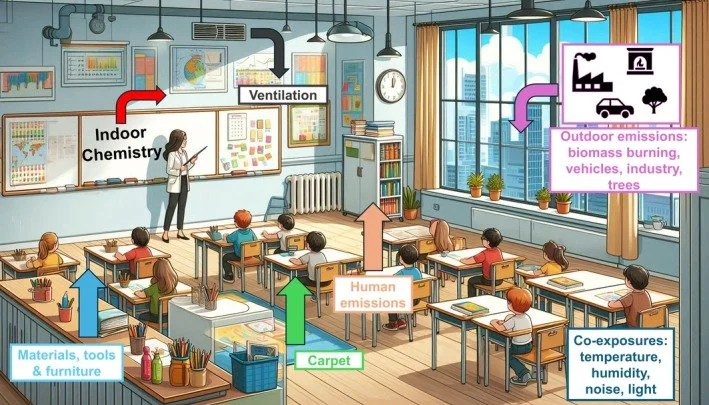
Illustration from the NIH showing the various factors that contribute to indoor pollution.
Why indoors is worse than outdoors
Modern builders construct new homes to strict energy efficiency standards, sealing them airtight to minimize heating and cooling costs. They deliberately eliminate air leaks and gaps throughout the structure. This saves you money on energy bills but traps pollutants inside. Builders choose synthetic materials to cut costs without realizing these products slowly release chemicals into your home for years. Berkeley and Harvard researchers revealed these dangers in the late 70s and early 80s, yet builders still haven't adopted the science. Consumer demand is starting to change some of these practices. As with everything it takes time for the word to spread. But if you’re reading this you still have plenty of time to make changes and start improving your home’s air quality.
Why Air Quality Matters for Your Health
Radon and carbon monoxide slowly poison us. This is easy to prevent, make sure you have CO2 detectors and get occasional radon tests!
Certain bacteria and mold trigger pneumonia and infections, hitting young children and elderly family members hardest. Indoor air fresheners, scented cleaners and candles trigger or worsen asthma attacks. Seems scary, but again this is highly preventable with an air purifier. You don’t need to make big changes to limit your family’s risk/
Women face a greater risk. We spend more time cooking, cleaning, and at home so our exposure is higher. Our homes should offer our families a safe space to recharge and rest. Instead, they threaten our health with higher concentrations of chemicals.
The 3 Most Effective Ways to Improve Indoor Air Quality
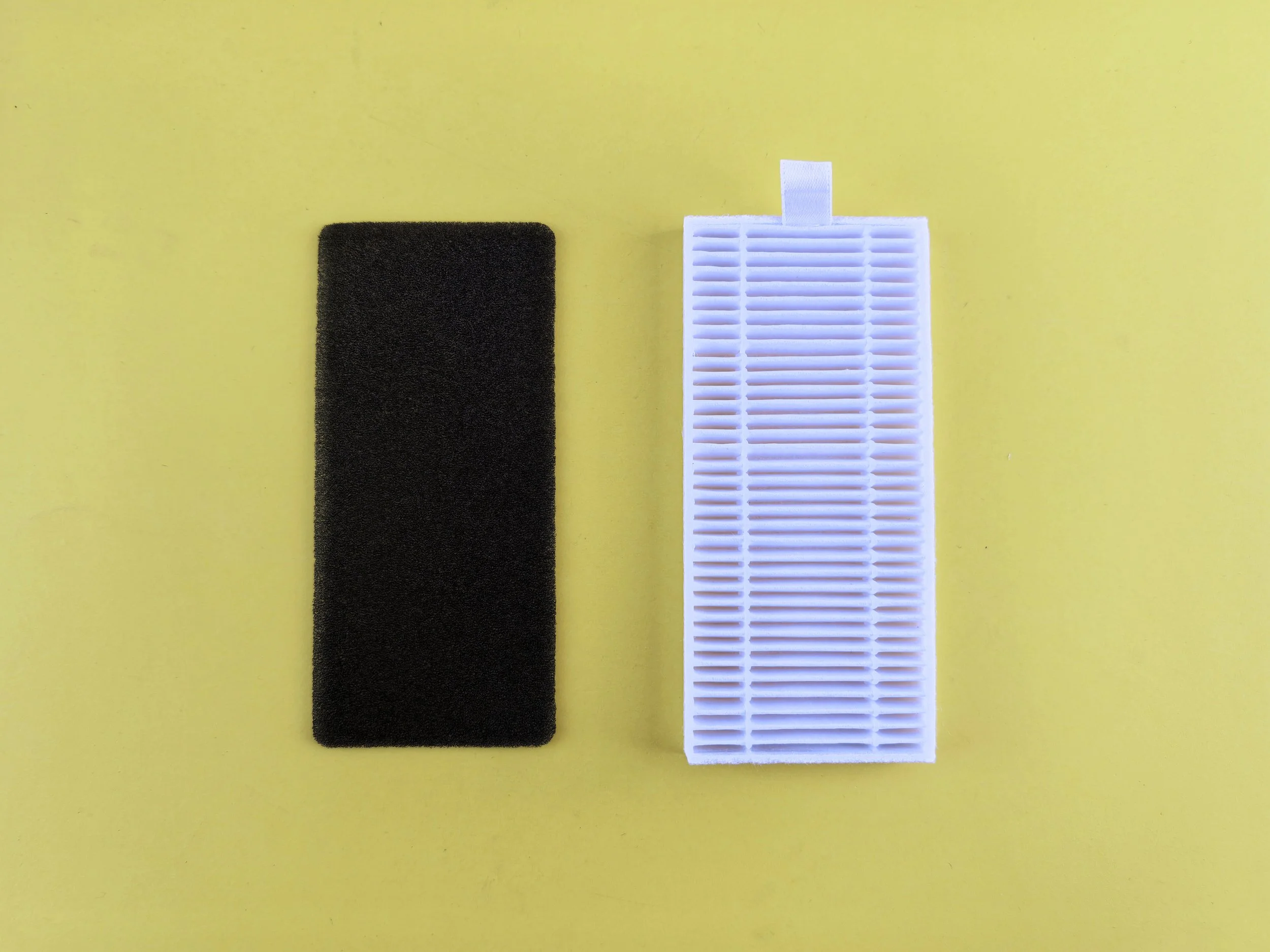
Remember to change your filters.
You can improve your indoor air quality in three ways: control sources, ventilate better, and purify the air.
Source Control (Reduce Toxins at the Source)
Start by controlling the chemicals you bring home. Choose safer cleaning products and ditch artificial fragrances.
Improve Ventilation (Fresh Air Still Matters)
Next, open windows for just 15 minutes daily and run exhaust fans while cooking or showering to flush out stale air.
Use Air Filtration (Do Air Purifiers Actually Work?)
Finally, invest in a true HEPA filter and change your HVAC filters regularly to clean the air that circulates through your home. I can promise they made a noticeable difference in my own home. There’s so many factors we can’t control for our families but this is an easy one and adds lasting value.
Want to Reduce Hidden Toxins in Your Home Even Further?
If you’re thinking about air quality, it’s worth looking at what’s coming from everyday products too.I put together a free guide to help you reduce one of the most common indoor pollutants, phthalates, without going extreme.
This post contains affiliate links. However, the recommendations are my own paid purchases and were not gifted.
PFAS in Tap Water: How to Remove “Forever Chemicals” at Home
The U.S. Geological Survey found that almost half of all tap water tested contains PFAS or "forever chemicals." You've ditched non-stick pans for cast iron, but what about the water flowing from your faucets?
Your water may look and taste fine but still harbor invisible contaminants.
If you don’t filter your drinking water its time to start.
Switching to filtered water takes almost no effort and could meaningfully lower exposure to chemicals and microplastics.
I started to question my exposure to environmental toxins when my 4 year old dog developed a mast cell tumor even though she was eating a fresh food diet. It may seem dramatic, but pets and children react to much smaller levels of chemical exposure.
They’re an early warning sign that we have opportunities to improve our home’s health. When you know better you do better.
What Are PFAS in Drinking Water?
The U.S. Geological Survey found that almost half of all tap water tested contains PFAS or "forever chemicals." You've ditched non-stick pans for cast iron, but what about the water flowing from your faucets?
Your water may look and taste fine but still harbor invisible contaminants. Pollution enters at the source, during treatment, or through your home's pipes. Old infrastructure and regulations allow for harmful chemicals into our drinking water.
Keep reading to understand what causes the problem, but I think everyone should use some sort of water filtration. Skip to the end for my preferred options.
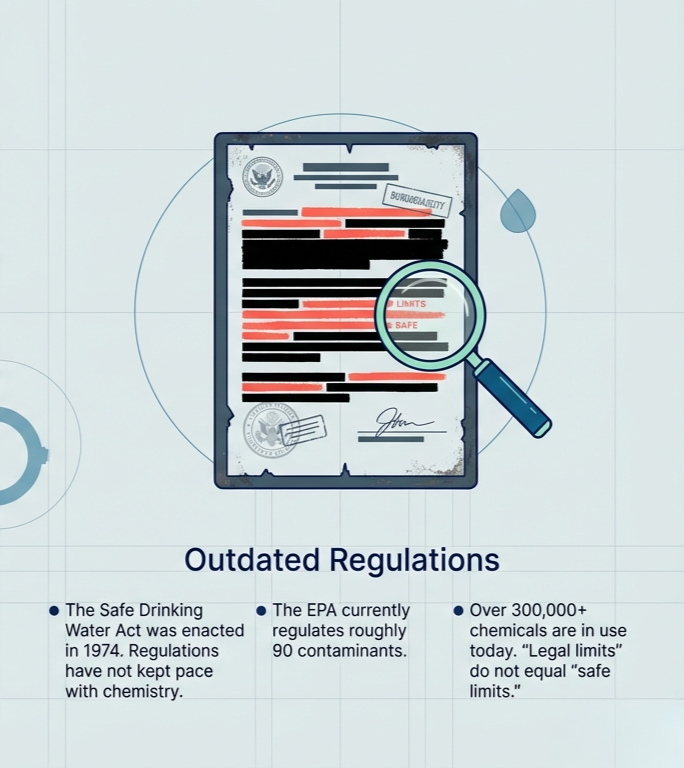
EPA regulations can’t keep up with chemicals in circulation today.
Aging Infrastructure
Builders constructed many water systems 50-100+ years ago. Metro areas have even older systems—some homeowners still have lead, wood, or terracotta pipes.
9 million service lines still contain lead. Flint wasn't isolated.
Outdated Regulations
Congress enacted the Safe Drinking Water Act in 1974, but regulations haven't kept pace. The EPA regulates roughly 90 contaminants, yet 300,000+ chemicals are in use today.
"Legal limits" don't always equal "safe limits."
This is why some consumers prefer to use EU brands. The EU is a more risk averse system where brands must prove ingredients are safe. The US allows brands to self certify ingredients are safe and tend to assume ingredients are safe until proven otherwise.
Are PFAS Harmful to Your Health?
There’s a myriad of things in our tap water. Some are harmless and some are a little more suspect.
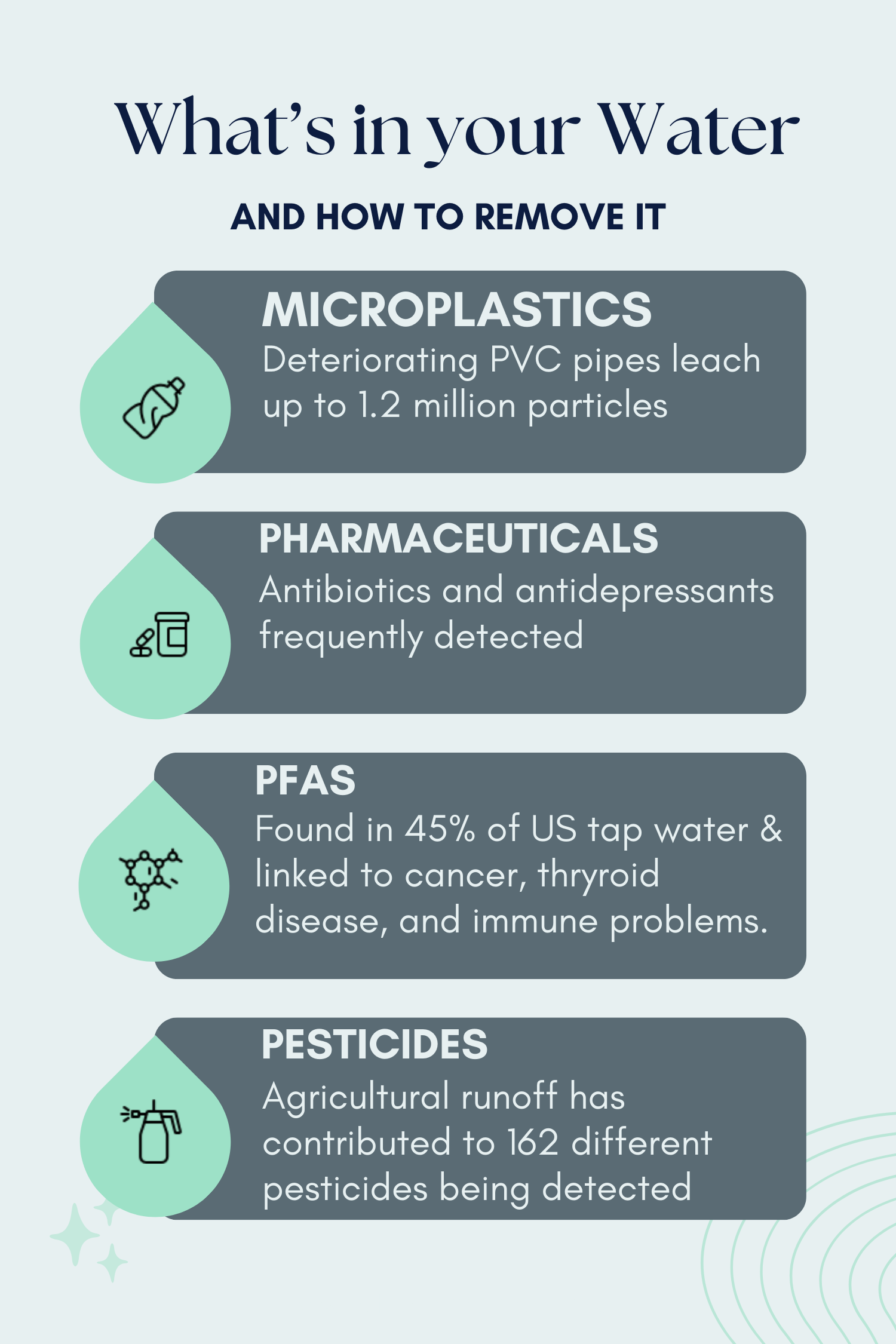
There’s more contaminants in your water than you think.
PFAS ("Forever Chemicals")
Linked to cancer, thyroid disease, immune problems
Microplastics
220,000 to 1.2 million particles enter your body annually through tap water
PVC pipes degrade and release these particles
Lead
Corrodes from old pipes and fixtures into your water
Fluoride
2 million people receive water above safe thresholds
This one is still being hotly debated and lacks consensus from the scientific community
Pesticides & Nitrates
162 pesticides detected from source to tap
Agricultural runoff contaminates groundwater
Pharmaceuticals
Treatment plants can't filter them completely
Endocrine disruptors (think thyroid and fertility impacts) affect hormones (proven in fish, concerning for humans)
Chlorine Byproducts
Disinfection kills harmful microbes but creates new risks
Why testing isn’t worth the money.
You can test your water through the EPA’s Consume Confidence Report or use independent testing.
The EPA only tests for regulated contaminants (the 90, not the 300,000+). They also use levels that not everyone agrees are safe.
Labs like Tap Score provide comprehensive testing for $100-300. However, most filtration options are less than $300. You’re better off spending your money on a solution, not understanding how big the problem is.
Remember odds are your water could be better. I’d skip the test and just get a filter.
Reverse Osmosis vs Carbon Filters for PFAS
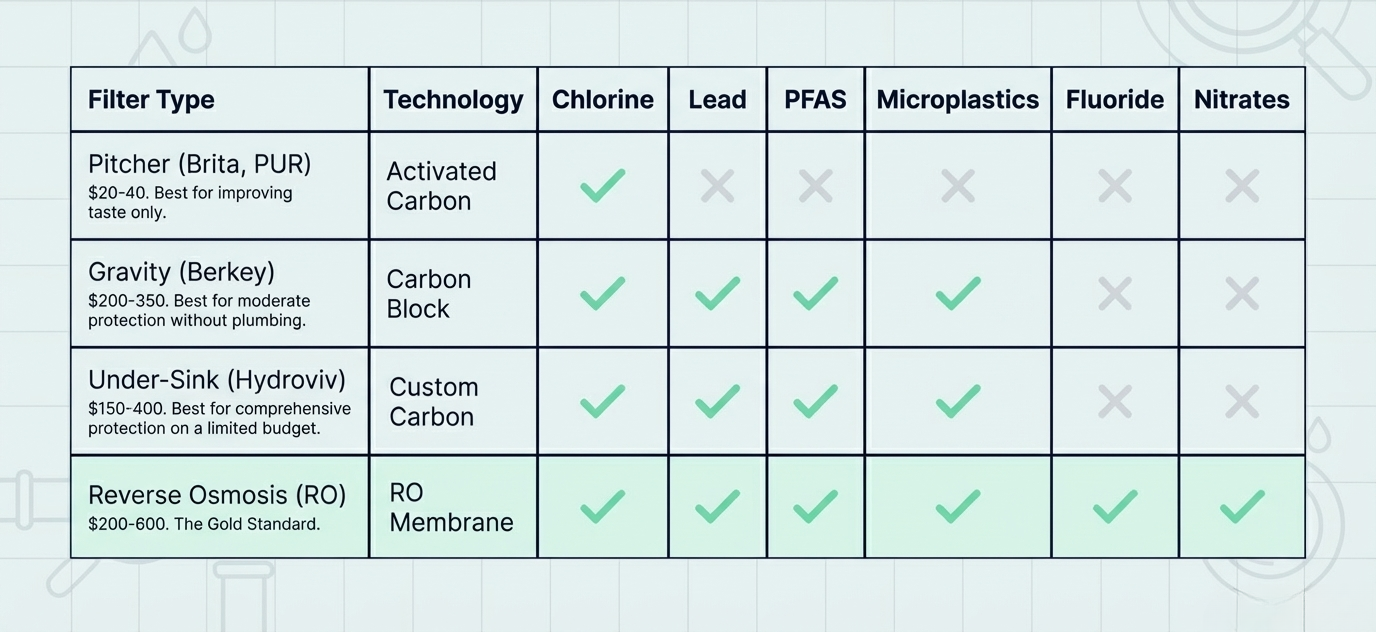
Understanding filtration is confusing. Few filters address all concerns. Here's the breakdown:
Time to upgrade from that Brita pitcher.
Pitcher Filters (Brita, PUR)
Water trickles through inexpensive activated carbon. Removes chlorine taste, but that's about it.
Gravity Filters (Berkey, Waterdrop King Tank)
Gravity forces water through millions of microscopic pores that trap contaminants.
Under-Sink Filters (Hydroviv)
Blend activated carbon, catalytic carbon, and ion exchange resins. Physically and chemically remove contaminants.
Reverse Osmosis Systems
The gold standard. Forces water through a semi-permeable membrane with microscopic pores. Blocks 99.9% of contaminants—lead, PFAS, arsenic, bacteria, viruses, pharmaceuticals, microplastics.
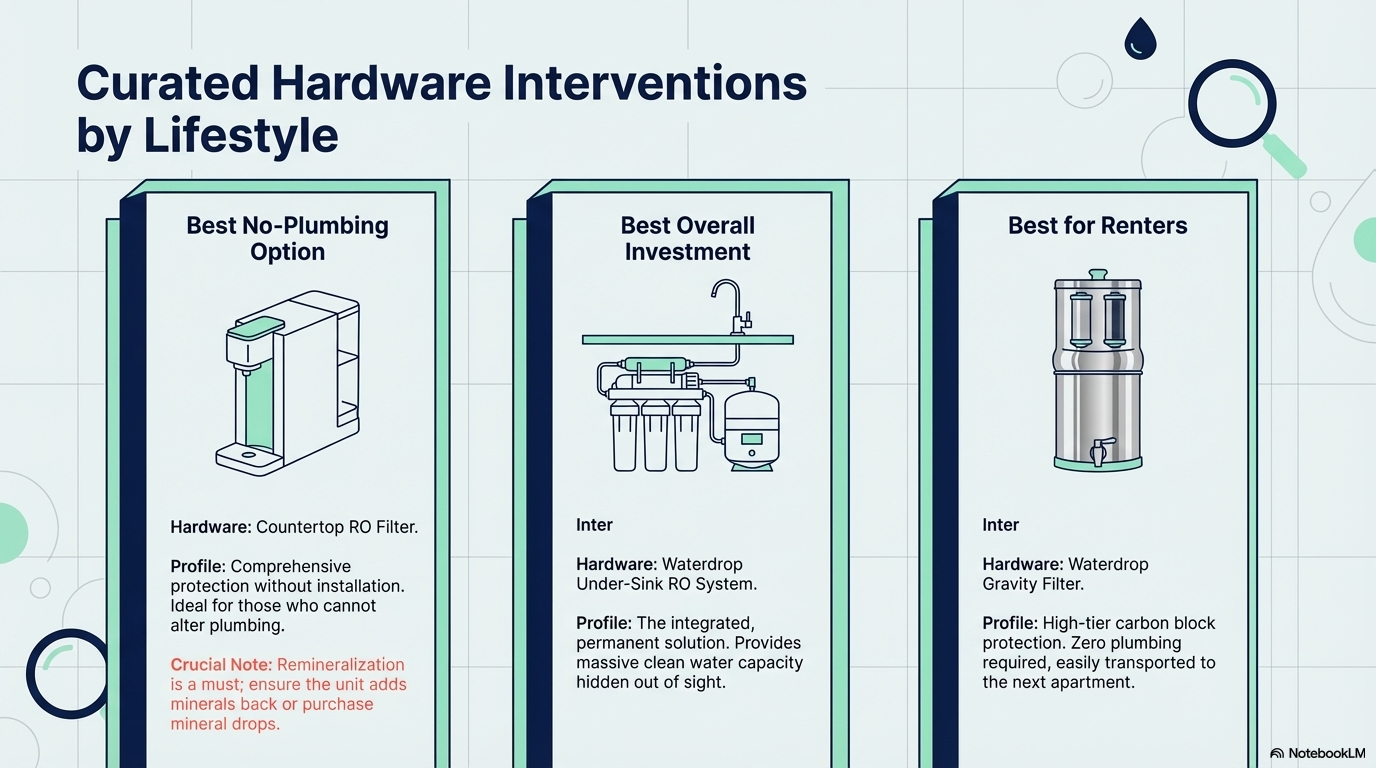
Given the potential health hazards, the conservative approach makes sense. Countertop RO systems offer affordability. Under-sink systems provide convenience with larger clean water tanks.
Water quality matters most for developing bodies. If you're pregnant, trying to conceive, or raising small children, invest in reverse osmosis. Better to be more conservative here.

There’s a filter option for every budget and situation. Anything is better than tap water.
Is Filtered Water Actually Safer Than Tap Water?
Small changes create big health impacts. Start today and rest assured you’re on the path to making your family healthier and happier. I’ve used all of these products at various points in my filtration journey.
Whatever you choose, make sure you understand filter cost and frequency of changes. Some of the upfront cheaper units need monthly filter changes. That adds up quick!
→ Shop My Top Water Filter Picks:
Best No Plumbing Option: Countertop RO Filter – Comprehensive protection without installation. Remineralization is a must or you’ll have to buy drops to add to the water.
Best Overall: Waterdrop Under-Sink RO System – Integrated solution with large clean water capacity
Best for Renters: Waterdrop Gravity Filter – No plumbing required, excellent filtration
A Note on Water Access
We're fortunate to consider whether our tap water is healthy enough. An estimated 2.2 million Americans lack running water entirely. Consider supporting organizations like the Navajo Water Project that bring clean water to communities without this basic necessity.
A More Practical Approach to Reducing Exposure
If you’re starting to rethink your water, it’s often a sign you’re ready to look at other everyday exposures too.
One of the biggest (and most overlooked) sources inside the home is phthalates. Download the free phthalate-free home guide here.