Natural Mosquito Control: How to Get Rid of Mosquitoes Without Sprays
It’s springtime in the US. As our yards and flowers are waking up, so are the spring and summer pests. I’ve already started noticing mosquitos hovering around some of my gutter downspouts. Before you call your local Mosquito Bro consider some alternatives.
Do Mosquito Sprays Actually Work? (Spoiler, They Don’t)
Traditional mosquito treatment uses a chemical called pyrethroids. It’s a synthetic version of pyrethrin, a derivative of chrysanthemums. Sounds natural and plant based, right? Unfortunately it’s not that simple. These chemicals are broad nerve agents, impacting the insect’s nervous system.
We’re finding more and more mosquito populations are becoming resistant to this chemical, decreasing its effectiveness. In fact, the CDC has stated that removing standing water and preventing larva is the only long term effective solution, while adding that spraying for adults is the least effective solution.
How Pesticides Affect Your Yard and Wildlife
The sprays that may (or may not) reduce mosquitoes also reduce all the beneficial insects in our gardens. Insect abundance has declined more than 75% over the last 30 years with pesticides being a major contributor. While it might sound nice in theory, most of the loss is beneficial insects that compete with mosquitoes. Residue from pesticides can travel up to 100m, approximately a football field, and poison caterpillars, butterflies, bees, and fireflies.
The CDC warns these pesticides are toxic to fish, birds, and small wildlife. As the birds, frogs, and fish eat the sprayed mosquitos they become sickened as well. The drift from these chemicals can be far reaching and detrimental to the local wildlife.
Are Mosquito Treatments Safe for Kids and Pets?What Are the Impacts to Your Family?
The trouble doesn’t stop at your door either. While pesticide companies claim safety, growing research suggests otherwise. An Environmental Health study found that young boys with detectable levels of mosquito treatment chemical pyrethroid are three times more likely to have ADHD. The same studies also found children under 5 exposed to pesticides were more than twice as likely to develop asthma.
Our pets spend even more time in the chemically treated grass. They’re 70% more likely to develop cancerous lymphomas if they live in a household that treats with conventional pesticides and herbicides.
In fact these pesticides contribute to tap water pollution, with US tap water testing positive for over 100 pesticides. It’s a small step but ditching conventional mosquito chemicals is a step in the right direction. One with compounding impacts for your health.
Natural Ways to Get Rid of Mosquitoes That Actually Work
Natural prevention is the most effective way to reduce mosquito populations so you can actually get out and enjoy your backyard. Plus the clean space and native flowers will encourage you to spend even more time out there. Hello vitamin D!
Reducing standing water is the first and most important step. This is the most impactful thing you can do. Adult mosquitos lay their eggs in still or standing water. Those eggs hatch into larvae and eventually grow up to be adults, starting the process all over again. We want to interrupt the cycle and prevent those babies from becoming egg laying adults. Certain mosquito eggs can survive multiple wet/dry cycles, so unfortunately you have to be diligent about removing standing water and its sources.
After we decrease their opportunities to lay eggs we want to plant flowers that deter them. While research suggests these plants mostly deter mosquitos when crushed, they’ll still attract beneficial pollinators. They also build a more bird and bat friendly ecosystem. Another important line of defense against mosquitos.
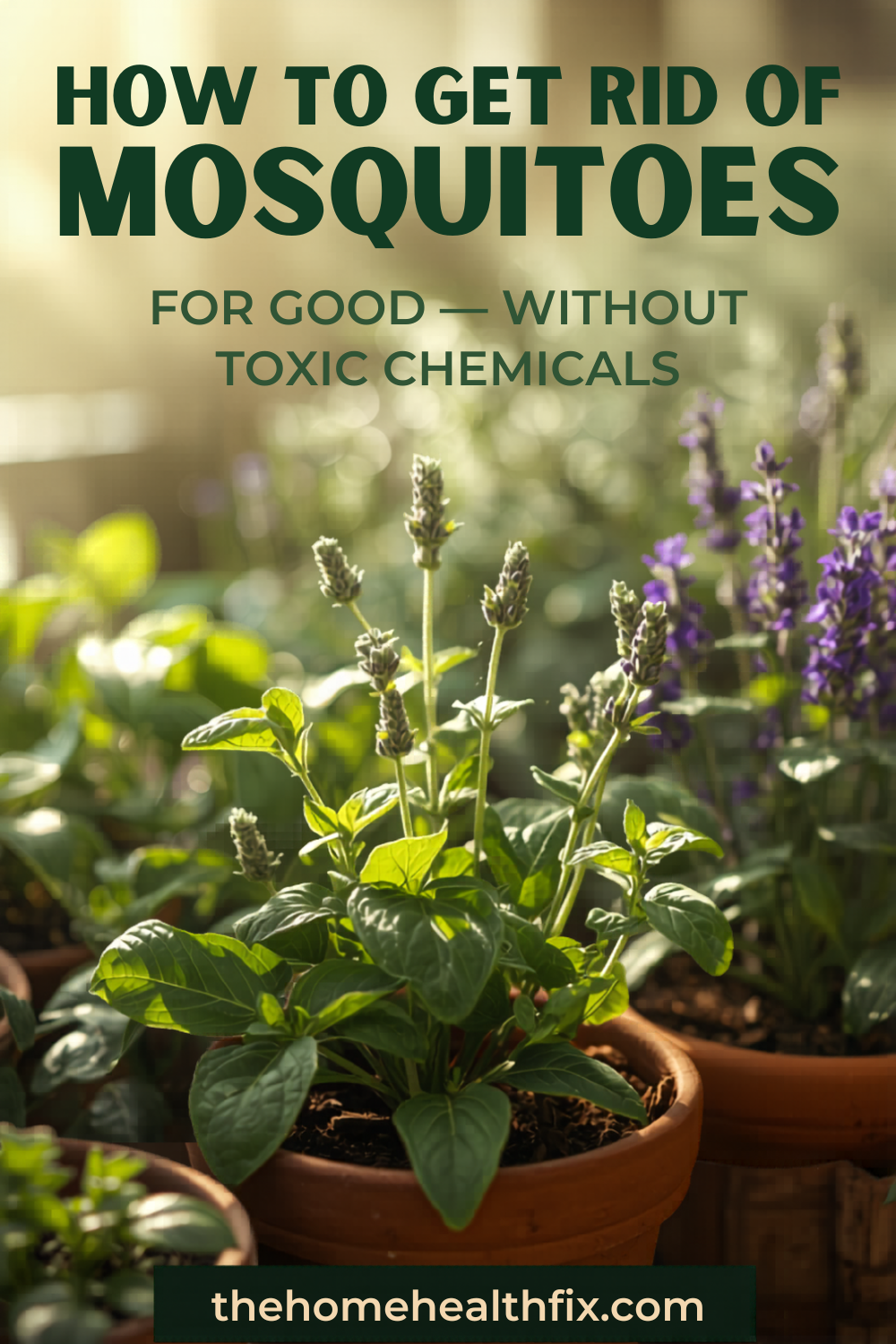
A list of my favorite anti-mosquito plants include:
Lavender
Basil (my personal favorite)
Lemon balm
Citronella grass
Marigolds
Rosemary
Mint
Catnip
Alliums (I love how whimsical these look)
Sage
I just planted two small container herb gardens and this is an easy way to add a bunch of these plants to your yard, and a few to your plate as well.
DIY Mosquito Audit (Find What’s Attracting Them)
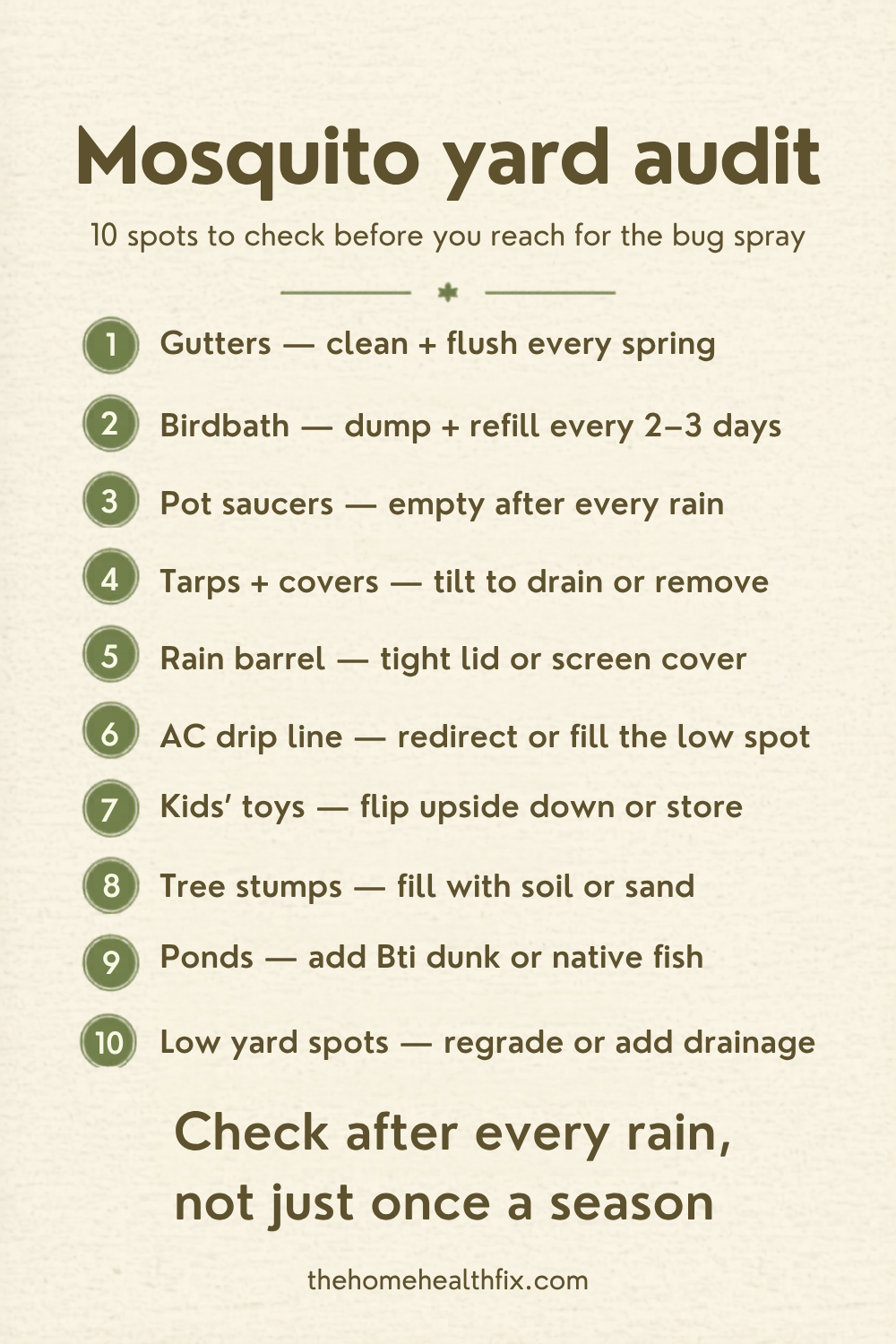
Take a few minutes this weekend and run through this quick checklist to look for sources of standing water in your backyard.
Non-Toxic Mosquito Repellent Alternatives
You’ve removed standing water and added beneficial plants — still looking for more? The next level of non-toxic mosquito prevention layers in traps and more chemical-free repellents.
Creating mosquito bait stations with buckets, some grass clippings and Mosquito Dunks, lure adults into the bucket to lay their eggs. However once the eggs are laid, beneficial bacteria in the Mosquito Dunks kill the larvae. Deadly to baby mosquitos but safe in stock ponds, animal watering troughs, and bird baths. You just don’t want anyone to eat a whole one so cover the bucket with wire or a plant cover.
Another step in our multi-step approach to reducing mosquitos is cedar mulch or chips. Research shows cedar oil can deter mosquitos by disrupting the sense of smell (how they locate humans) and disorienting them. You can buy cedar oil spray, but be cautious of spraying during the day as you might impact pollinators.
Research suggests cedar shavings, mulch and oil also deter ants, ticks, spiders, silverfish, and cockroaches. Making it effective against more than just mosquitos.
Kid-Friendly Backyard Ideas That Reduce Mosquitoes
Making your backyard a mosquito-free zone can be a great excuse to try some kid-friendly gardening projects.
Try:
Making a container garden (steps here)
Planting native flowers
Assembling mosquito buckets (follow these steps)
Any of these are a great excuse to get outside and get off your phone for a little while.
Like everything, we have to start somewhere. If the low-tox living narrative is overwhelming, don’t worry. You can commit to taking 15 minutes this weekend to audit your backyard for standing water and cancel that pest control appointment. That’s a huge win for your local wildlife and hopefully your health.
Affiliate disclosure: This article does contain a few affiliate links. They’re provided at no cost to you, but based solely on my previous purchases and recommendations.
